

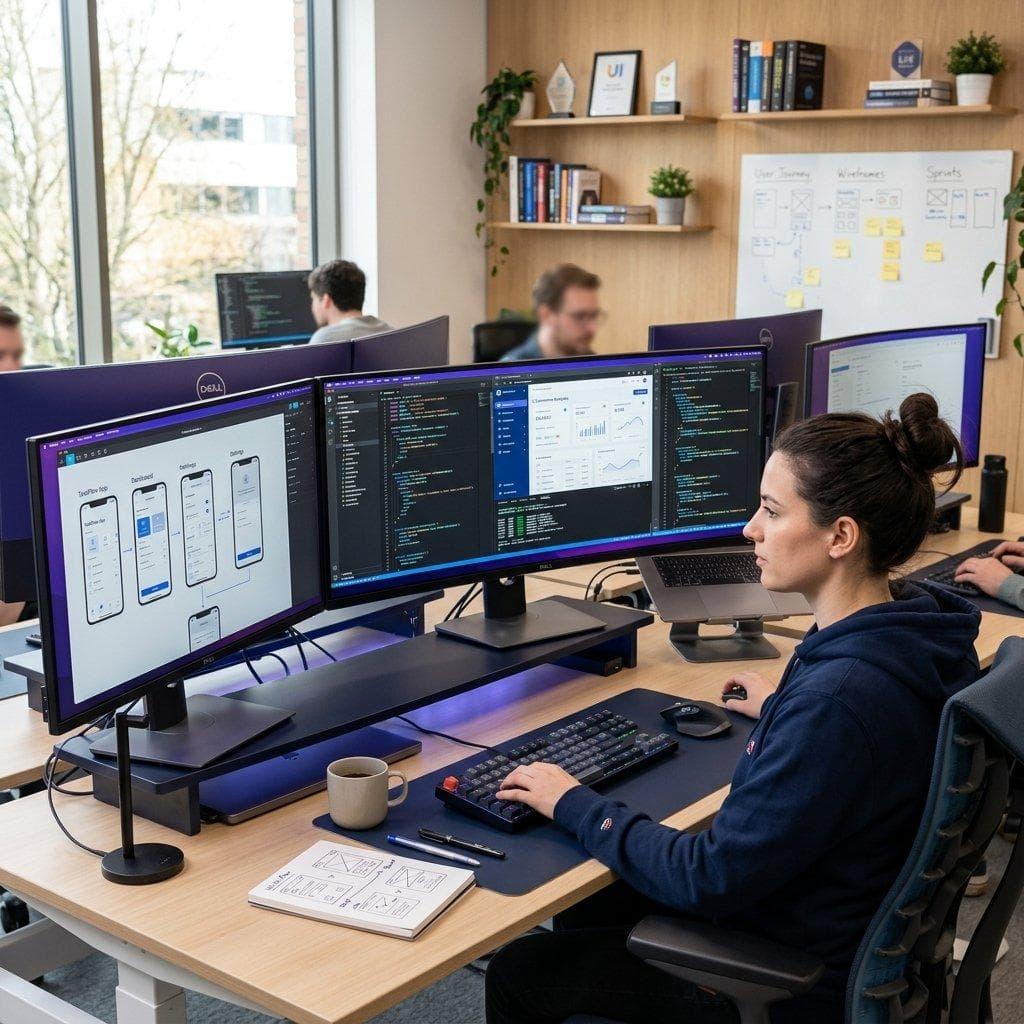
Engineering & Development: Building the Technology That Shapes Our Future

Category: Engineering & Development
Focus: Software Engineering, Web Development, Programming, Technology & Innovation
Technology is changing how we work, communicate, build businesses and solve everyday problems. Behind almost every digital product we use is a combination of engineering, programming, software architecture, databases and carefully designed systems.
From websites and mobile applications to cloud platforms, artificial intelligence and enterprise software, engineering and development make modern technology possible.
But engineering is not simply about writing code. It is about understanding problems, designing reliable solutions, building systems that work efficiently and continuously improving them.
Whether you are a beginner learning your first programming language, an experienced software developer, a WordPress specialist, a backend engineer or a technology entrepreneur, understanding engineering fundamentals is essential for long-term growth.
1. What Is Engineering & Development?
Engineering and development involve designing, building, testing, maintaining and improving systems that solve real-world problems.
In the technology industry, this includes several interconnected disciplines:
-
Software engineering: Designing and developing reliable software applications.
-
Web development: Building websites, web applications and online platforms.
-
Backend development: Managing application logic, databases, authentication and server-side operations.
-
Frontend development: Creating user interfaces and interactive experiences.
-
Database engineering: Organizing, storing and retrieving information efficiently.
-
System architecture: Designing how different components of an application work together.
-
DevOps and infrastructure: Managing deployment, automation, servers and application reliability.
-
Cybersecurity engineering: Protecting applications, infrastructure and user information.
These disciplines work together to create the digital products businesses and individuals depend on every day.
2. Programming Languages Every Developer Should Understand
Programming languages are tools for communicating instructions to computers. Choosing the right language depends on the problem, application architecture and development environment.
Some important languages include:
PHP
PHP remains an important language for server-side web development. It powers WordPress and many established web applications.
Developers working with PHP should understand object-oriented programming, database operations, security, performance optimization, design patterns and modern PHP development practices.
JavaScript and TypeScript
JavaScript is essential for modern web development. It supports interactive browser experiences and server-side applications through technologies such as Node.js.
TypeScript adds static typing, helping developers build and maintain larger applications with greater confidence.
Python
Python is widely used in automation, data processing, artificial intelligence, backend development and engineering tools.
Java
Java is commonly used in enterprise applications, backend systems and large-scale business software.
C and C++
These languages are important in embedded systems, operating systems, performance-critical applications and hardware-related development.
The important lesson: Do not try to learn every programming language at once. Choose one based on your career direction, understand its fundamentals and learn how to apply it to real problems.
3. Web Development: From Websites to Business Applications
Web development has evolved far beyond creating simple websites.
Modern web applications support online businesses, professional communities, financial services, marketplaces, educational platforms and enterprise operations.
A typical web application includes three major areas:
Frontend: The interface users interact with, built using HTML, CSS, JavaScript and frameworks such as React.
Backend: The application logic responsible for authentication, permissions, business rules and data processing.
Database: The system that stores users, transactions, content, application settings and other information.
Technologies worth learning include:
-
HTML5 and CSS3
-
JavaScript and TypeScript
-
React and Next.js
-
PHP and WordPress
-
Node.js
-
REST APIs
-
MySQL and PostgreSQL
-
Git and GitHub
Understanding how these technologies work together is more valuable than simply knowing their names.
4. WordPress Development Is Still an Important Engineering Skill
WordPress is more than a blogging platform. It can power business websites, membership platforms, online stores, publishing systems, directories and custom applications.
Professional WordPress developers should learn:
-
PHP and object-oriented programming
-
WordPress hooks, filters and core architecture
-
Custom plugin development
-
Custom theme development
-
Gutenberg block development
-
WordPress REST API
-
WooCommerce customization
-
Database optimization
-
WordPress security and performance
-
Integration with external services
The next stage of WordPress development increasingly involves combining WordPress with modern JavaScript frameworks, external APIs and AI-powered services.
A developer who understands both WordPress internals and modern application architecture can build much more than a conventional website.
5. APIs and System Integration
Modern applications rarely operate independently.
A website may connect to a payment gateway, email service, CRM, inventory system, mobile application or third-party data provider.
APIs make these integrations possible.
Developers should understand:
-
REST API architecture
-
HTTP methods and status codes
-
JSON data structures
-
Authentication and authorization
-
API keys and access tokens
-
Webhooks
-
Rate limiting
-
Input validation
-
Error handling
-
API documentation
For example, an e-commerce application might use an API to communicate with a payment gateway. Once a payment is completed, a webhook can notify the application to update the order status.
Understanding these interactions is essential when developing connected business applications.
6. Database Engineering and Application Architecture
A poorly designed database can create serious performance and maintenance problems as an application grows.
Developers should understand how to design databases before building complex features.
Important concepts include:
-
Tables, rows and columns
-
Primary and foreign keys
-
Database relationships
-
SQL queries
-
Indexing
-
Transactions
-
Query optimization
-
Database backups
-
Data integrity
-
Database security
MySQL and PostgreSQL are useful technologies to study.
Beyond databases, application architecture determines how software components are organized and communicate.
Learn about modular architecture, separation of concerns, reusable components, caching, background jobs and scalable application design.
Good architecture makes applications easier to maintain, test and expand.
7. Software Security Is Part of Engineering
Security should never be treated as an optional feature added after development.
Every developer has a responsibility to understand common vulnerabilities and build applications with security in mind.
Important topics include:
-
SQL injection
-
Cross-site scripting (XSS)
-
Cross-site request forgery (CSRF)
-
Broken access control
-
Authentication weaknesses
-
Password hashing
-
Secure session management
-
File upload validation
-
API security
-
Dependency vulnerabilities
-
Secure configuration management
Developers should validate input, escape output where appropriate, apply authorization checks and avoid exposing sensitive information.
Security must be considered throughout the development lifecycle, from initial design to production maintenance.
8. Testing, Debugging and Code Quality
Writing code is only one part of software development. Developers must also verify that their applications behave correctly.
Testing helps identify defects before they affect real users.
Important testing approaches include:
-
Unit testing
-
Integration testing
-
API testing
-
Functional testing
-
End-to-end testing
-
Performance testing
-
Security testing
Developers should also become comfortable with debugging tools, application logs, browser developer tools and error monitoring.
Readable code, meaningful naming, documentation and consistent coding standards make projects easier for other developers to understand and maintain.
9. Cloud, DevOps and Modern Deployment
A working application on a developer's computer is not the same as a reliable production application.
Modern engineering requires an understanding of deployment, infrastructure and ongoing operations.
Useful technologies and concepts include:
-
Linux fundamentals
-
Git and GitHub
-
Docker
-
CI/CD pipelines
-
Cloud hosting
-
Nginx and Apache
-
Environment variables
-
Application monitoring
-
Backups and recovery
-
Server security
You do not need to become a DevOps specialist to benefit from these skills. Even basic deployment knowledge makes a developer more independent and effective.
10. Artificial Intelligence Is Changing Software Development
Artificial intelligence is changing how developers write, review, understand and maintain code.
AI coding assistants can help with generating code, explaining errors, writing tests, documenting functions and exploring unfamiliar technologies.
However, AI-generated code is not automatically secure, efficient or correct.
Developers must be able to:
-
Understand the problem before asking AI for a solution.
-
Provide accurate technical context.
-
Review generated code carefully.
-
Test the implementation.
-
Check security and performance implications.
-
Understand the final solution well enough to maintain it.
The strongest developers will not simply be those who use the most AI tools. They will be those who combine engineering fundamentals, sound judgment and effective use of automation.
11. Practical Projects That Develop Real Engineering Skills
Reading tutorials is useful, but building real applications is where knowledge becomes practical experience.
Consider developing these projects:
Project 1: Professional Membership Platform
Build user registration, profiles, authentication, permissions, member directories and private messaging.
Project 2: WordPress Management Tool
Create a dashboard that connects multiple WordPress websites and reports their update status, uptime and security information.
Project 3: REST API Application
Build a backend API with authentication, database relationships, validation, pagination and error handling.
Project 4: AI-Powered Application
Connect an AI API to a web application and build a useful feature such as document analysis, support assistance or intelligent search.
Project 5: Business Marketplace
Develop supplier profiles, product listings, buyer enquiries, company pages and an administrative dashboard.
For every project, document the problem, architecture, technologies, implementation decisions, testing process and lessons learned.
A working project with clear documentation is a much stronger demonstration of engineering ability than a long list of technologies on a résumé.
12. How to Build a Long-Term Career in Engineering & Development
Technology changes quickly, but strong engineering fundamentals remain valuable.
A practical development path looks like this:
-
Beginner: Learn programming fundamentals, HTML, CSS, JavaScript and basic databases.
-
Junior developer: Build small applications, understand APIs and learn Git.
-
Mid-level developer: Work with architecture, testing, security, performance and integrations.
-
Senior developer: Design complex systems, review code, mentor developers and make technical decisions.
-
Technical leader: Connect engineering decisions with business requirements, reliability, budgets and long-term product strategy.
You do not need to follow exactly the same path. Different people specialize in frontend development, backend engineering, infrastructure, security, embedded systems or software architecture.
The goal is continuous professional improvement.
Conclusion: Build Skills That Solve Real Problems
Engineering and development are about more than frameworks, programming languages or the latest technology trends.
They are about solving problems, creating dependable systems and building products that provide real value.
Learn the fundamentals. Experiment with new technologies. Build practical projects. Understand security. Share your experience and learn from other professionals.
The future belongs to engineers who can think critically, adapt to change and turn ideas into working solutions.
Keep learning. Keep building. Keep engineering.
Join the Engineering & Development Community on Abhira
Connect with developers, engineers, technology professionals and entrepreneurs. Share your projects, discuss technical challenges, exchange knowledge and discover opportunities to grow.
Abhira — A Network for Professionals. A Platform for Growth.


